
Premed/Predent
Bachelor of Science
Program Overview
Becoming a physician or dentist means you have a long road of schooling and residency ahead of you. But it also means you’ll experience many rich, rewarding moments as you care for your patients.
At BJU you’ll find a challenging curriculum specifically designed to prepare you for those years in medical or dental school. You’ll benefit from professors committed to teaching from a biblical worldview—and equally committed to preparing you to thrive as a Christian in the medical field.
When you graduate, you’ll follow in the footsteps of hundreds of BJU’s premed/predent graduates who are now practicing physicians or dentists.
Your Future
- Physician (Medical Doctor, MD)
- Osteopathic Physician (Doctor of Osteopathy, DO)
- Physician Assistant (PA)
- Dentist (DDS, DMD, orthodontist, periodontist, pedodontist)
- Forensic Pathologist
- Optometrist (OD, Doctor of Optometry)
The premed/predent program at BJU opens the door to many career possibilities including:
Career Support
BJU offers students a variety of ways to network with employers and organizations. A multitude of job opportunities are posted each year on Career Central, our online job board. In addition, more than 60 businesses and 150 Christian schools/mission boards/Christian organizations come on campus to recruit students through on-campus interviews and job/ministry fairs.
Career Services also helps students by holding seminars on resume preparation and interview techniques.
More than 80% of our premed graduates are accepted to medical or dental school within a year of graduation.
(National average is 43%)
Testimonials
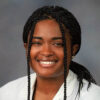
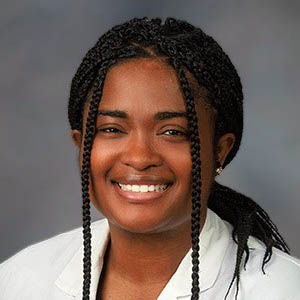
Brittany Butler, ’17
The education that I received through the premed program at BJU has been foundational to my medical career and has carried me through some of the most challenging yet meaningful times of my life.
The rigorous, thorough, and sometimes grueling education that I received greatly equipped me for the rigors of medical school. It more than adequately prepared me for the depth of the material that was presented to me and taught me how to study, approach problems critically, and ask the right questions to arrive at the correct answers. Most importantly, it was all based on a Biblical worldview, which prepared me to be able to defend my faith and increased my appreciation and awe of the wonderful design of God’s marvelous creation—the human body.
Through my education at BJU, God also blessed me with incredible teachers that have become mentors supporting and guiding me through every step of my career. They have prayed for me, spoken wisdom into my life and encouraged me through hard times. I will forever be grateful for the teachers, mentors, and lifetime friends that I have met through my time at BJU.
By God’s grace, I have recently finished residency in Obstetrics and Gynecology, and am now pursuing a fellowship in Maternal Fetal Medicine. I know that my education at BJU will continue to prove to be invaluable to me as I pursue God’s calling on my life to care for women and their babies with strength, honor, and compassion.
Learning Experience
Unlike many other schools, BJU offers a true premed program. Most programs that call themselves “premed programs” are actually biology programs with premed advising.
In contrast, we designed our curriculum to give you the ideal combination of biology, chemistry, physics, mathematics, ethics, psychology, and sociology that will prepare you to be an outstanding medical school prospect. You’ll learn how to think logically, analytically and biblically about the concepts that matter most in medicine.
As a student in the BJU premed program, you’ll enjoy a hands-on education that includes courses in our cadaver lab and a medical internship in the largest hospital system in South Carolina. Our program’s emphasis on physiology—how living things function—lays the foundation for thinking like a physician who knows how to diagnose and treat patients.

BJU Core
To effectively minister as a medical professional, you need more than just math and science skills. Core courses like Bible, communication and philosophy will equip you to compassionately work with people from all walks of life.
Electives
The premed/predent program has a number of electives that allow you to focus your program. Students most commonly choose biology courses, such as bacteriology and virology, histology, immunology, and cell and molecular biology.


Faculty Spotlight
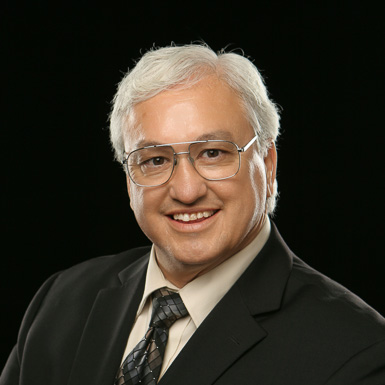
Marc Chetta earned his MD degree from LSU School of Medicine. He had a private practice in a small rural town doing general medicine, emergency medicine, ob-gyn and some general surgery. Later he became the ER medical director at Habersham County Medical Center in Georgia. With the help of two colleagues, he formed his own ER company, Covenant Emergency Physicians, LLC, and served as its president for 6 years.
Courses/Objectives
1st Year
- Composition & Literature
- General Biology II
- Creation to New Creation: Exploring the Bible for Life
- Calculus Elective
(3 credits) - Psychology Elective (200/400-level)
(3 credits)
2nd Year
- Biostatistics
- General Chemistry II
- Introduction to Public Health-EXP
- Hermeneutics: Interpreting the Bible for Life
- Biology Elective (300/400-level)
(3 credits)
3rd Year
- Human Physiology & Anatomy I
- Organic Chemistry I
- Doctrines: Bibliology to Angelology
- Physics Elective
(4 credits)
- Human Physiology & Anatomy II
- Organic Chemistry II
- Doctrines: Anthropology to Eschatology
- Physics Elective
(4 credits)
4th Year
- Biochemistry II-EXP
- Biomedical Ethics
- Student Medical Internship-EXP
- Oral Communication for the Professions
- Biology Elective (300/400-level)
(4 credits)
- Program
- BJU Core
- Elective
Program Objectives
Each student will:
- Formulate a biblical philosophy of medicine incorporating observations and assessments of physicians/dentists in their ethical, professional and clinical environs.
- Analyze the interrelationship among basic life processes and substances from a biological, biochemicaland biophysical perspective with special emphasis on the role of information and energy transduction.
- Critically and logically evaluate the limitations of science and the central concepts of neo-Darwinism and construct counter arguments against them.
- Interpret and critique experimental data and experimental designs, formulate testable hypotheses, and competently investigate hypotheses in the laboratory.
- Apply the relationship that exists between structure and function on the cellular, organ, system, and human levels and make correct predictions of the failure of homeostatic mechanisms as well as the positioning of cells during development.
- Solve inheritance problems that demonstrate an understanding of fundamental transmission genetics and evaluate the role of epigenetic inheritance.
- Apply the central dogma of molecular biology as a limited explanatory model for information storage and regulation of gene expression.